

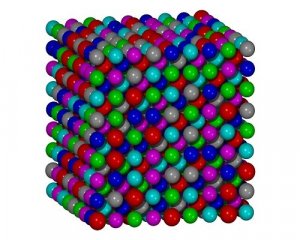
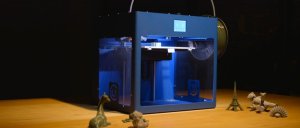


A Polish company is developing a liquid armor based on shear-thickening fluid that hardens instantly upon high-speed impact, offering protection against projectiles while remaining flexible. The material could also be used in sports equipment, car bumpers, and road barriers, according to researchers.
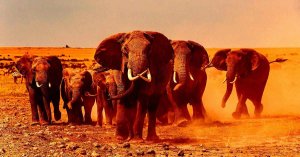
A 75-year-old California vineyard owner and his guide were fatally trampled by a herd of elephants in Gabon while on a licensed antelope hunt. The incident has reignited debates over trophy hunting, with some defending the hunter's conservation record and others condemning the practice.

Record-breaking heat events in 2023 and 2024 have outpaced even the most pessimistic climate models, leaving scientists stunned. Experts warn that the accelerating trend, coupled with a potential AMOC slowdown and policy backsliding, points to worsening extremes ahead.

During a conference call about the SolarCity merger, Elon Musk revealed that Tesla's Model 3 will integrate the same solar roof technology. The company has formed a glass technology group to develop this, potentially enabling features like self-defrosting windshields that generate energy.
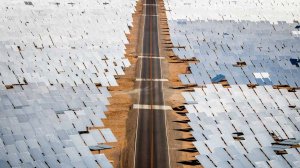
California's Senate is set to vote on SB 100, a bill that would require utilities to source 100% of their electricity from carbon-free sources by 2045. The measure, which accelerates existing renewable targets, has drawn support from Stanford researchers who cite falling solar and wind costs. If passed, the law would position the world's fifth-largest economy as a major driver of clean energy adoption.
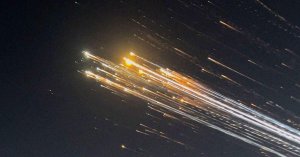
A University College London researcher estimates that the January 16 explosion of SpaceX's Starship upper stage may have released up to 45.5 tonnes of metal oxides and 40 tonnes of reactive nitrogen into the upper atmosphere. The preliminary figures, based on the spacecraft's mass and composition, highlight the growing environmental concerns of rocket launches, though some debris likely fell into the ocean, reducing the actual impact.

SoftBank, NASA, and AeroVironment are preparing to test a solar-powered drone, the Hawk 30, that could deliver 5G signals to underserved regions. The first flight may occur next week, with additional tests planned over three months. Previous efforts by Facebook and Google faced setbacks, but the project continues.
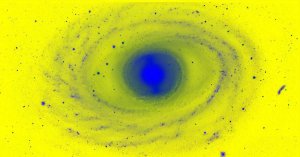
Researchers at the University of Hawaii propose that some black holes might actually be dense blobs of dark energy, potentially explaining cosmic expansion and odd gravitational waves. The theory, published in The Astrophysical Journal, remains unconfirmed and faces skepticism from other physicists.
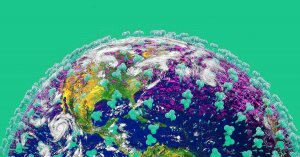
A new study reveals that daily global carbon emissions fell by 17% during the pandemic, the largest drop since 2006. The decline, driven by lockdowns, is likely temporary unless governments implement structural changes. Researchers urge leaders to consider climate in post-pandemic recovery plans.

China Merchant Energy Shipping has launched the New Aden, a 1,000-foot supertanker fitted with four retractable sails that cut fuel consumption by 9.8 percent. The system, which adjusts automatically to wind conditions, could save over 2,900 tons of CO2 on a Middle East-to-China voyage, marking a practical step for wind-assisted shipping.
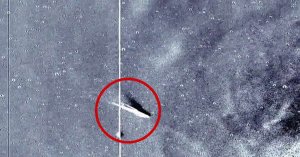
NASA's STEREO-A spacecraft captured a coronal mass ejection striking Comet Nishimura, briefly severing its tail. The event, observed as the comet sped past the Sun, offers a rare glimpse into solar wind interactions with icy bodies.
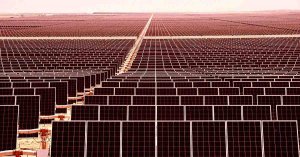
Across Europe, renewable energy oversupply is pushing electricity prices below zero, a trend that threatens to slow new investments. Industry leaders and regulators warn that without better storage, the economics of green power could stall.

A new study from the University of Edinburgh proposes that prototaxites, mysterious tube-like fossils from 400 million years ago, may represent an entirely unknown branch of life. The analysis, which found no chitin in the samples, challenges the long-held fungal hypothesis and suggests a unique multicellular experiment that has no living relatives.
China's carbon dioxide emissions fell for the first time on record, driven by rapid expansion of wind, solar, and nuclear power, according to a new analysis. The decline occurred even as national energy demand surged, marking a structural shift in the country's energy landscape.
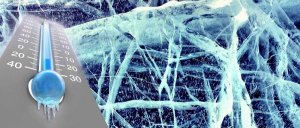
Researchers have predicted a new crystalline ice structure with record-low density, potentially the 18th known form. If synthesized, it could be the first discovered in the U.S. since before World War II. The team's simulations outline extreme conditions required for formation.